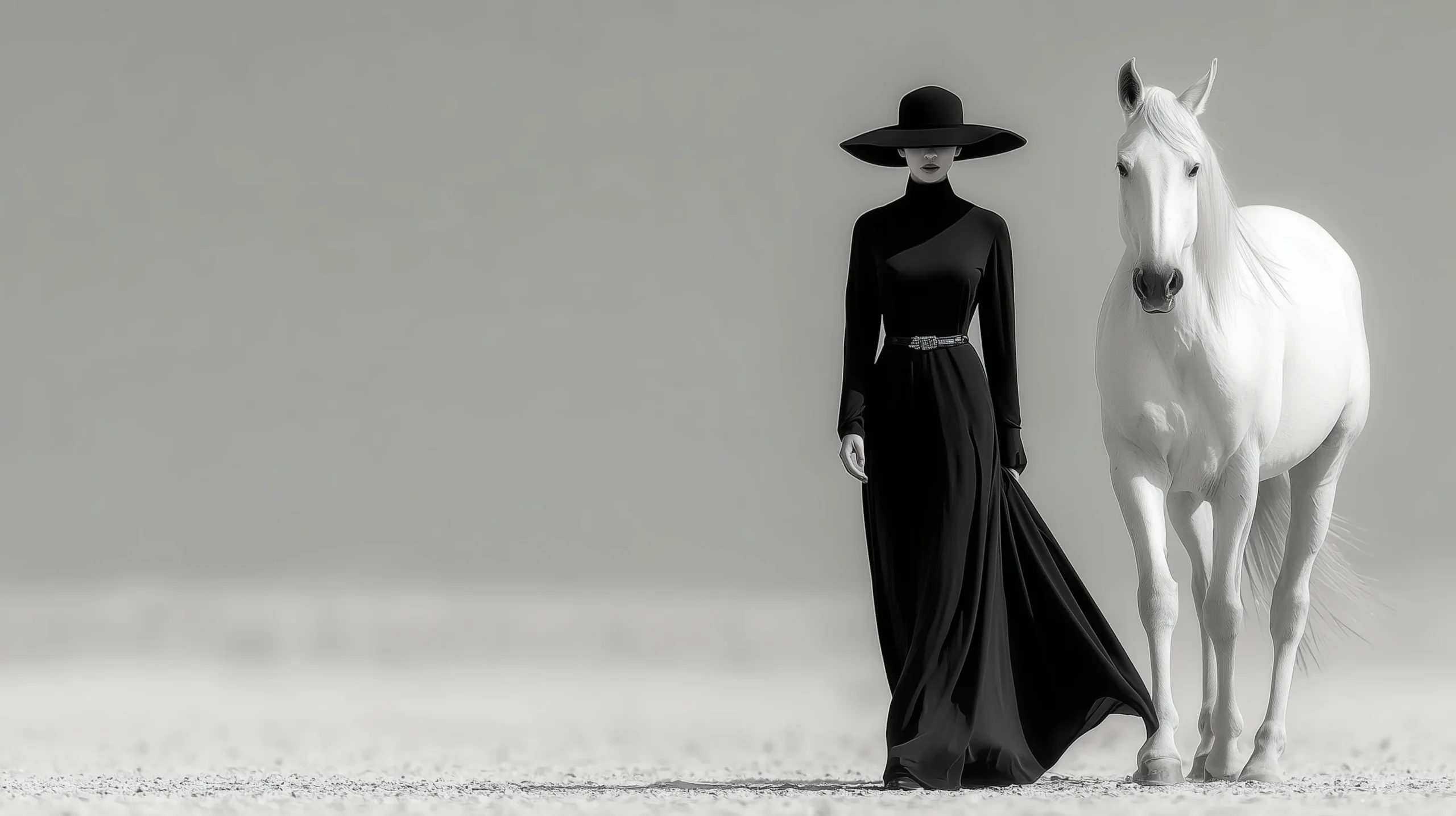
The Gutter And The Temple
Glitch Cinema Presents, THE GUTTER AND THE TEMPLE
There is something that lives in the dark. Not evil. Not the monster under the bed. Not the thing your mother warned you about. Something older.
Something that was here before the light learned to name itself, before good and bad were invented, before holy and unholy were drawn on the map like borders between countries that exist only in the minds of men. It has no face to show.
It has no name to call. It cannot be displayed or framed or hung on the wall of your becoming. It lives where you do not look. It has been waiting for you.
Let me tell you about her. Not the her they would tell you about — the cautionary tale, the fallen woman, the moral lesson wrapped in flesh and presented at the temple of good behavior as proof of what happens when you stray. The real her. The one no one has ever asked about.
Her name doesn’t matter anymore. She had one once. A mother gave it to her, whispered it into the wet black hair of a newborn in a room that smelled of blood and hope and turmeric. A name that meant something — light, or river, or gift from God.
God. She laughs when she thinks of that now. Not bitterly. That would require energy she no longer has. She laughs the way a river laughs when it finally reaches the sea — a kind of dissolving, a kind of giving up that is also a giving over. She is sixty-three years old. Her body is a map of a country no one wants to visit anymore.
Let me tell you what they don’t tell you about a woman who sells her body: she doesn’t sell her body. She rents it. And in the renting, she learns something that the wives and the mothers and the respectable women never learn — she learns what men are made of when no one is watching.
She has held the judge and the priest and the politician. She has held the father of three who wept after and the young man who couldn’t finish and blamed her for his own terror. She has held the lonely and the cruel and the desperate and the bored. She has held an entire civilization in her arms, night after night, and absorbed its secrets like a sponge absorbs water. And the civilization called her dirty. And she said nothing. Because she knew. She knew that the dirt was never hers.
Now she sits at the window of a room that smells of yesterday’s rice and the slow amber of kerosene and time passing through a body that has stopped pretending. The window looks out on an alley where children play and dogs sleep and women hang laundry like flags of surrender to the ordinary. She watches. She has become a professional watcher. There is nothing left to do but watch.
Her hands. Look at her hands. These hands that touched ten thousand men. That learned the geography of desire before she learned the geography of continents. That knew the difference between a man who wanted to be held and a man who wanted to hold, between a man running toward something and a man running away. The hands are still now. They rest on her knees like two tired birds that have finally found a branch. The nails are cracked. The veins are rivers seen from space. The skin is a landscape of everything she has survived. These hands — these holy, unholy, sacred, profane, blessed, cursed, ordinary, extraordinary hands — they will touch no one else. They have touched enough.
You want God?
God is not in the golden dome. The golden dome was built by men who wanted to be seen building. They stacked the stones and gilded the roof and pointed upward as if God lived in a direction, as if holiness had a zip code, as if the divine could be housed like a tenant who pays rent on time.
God is not in the white clothes of the pure. The pure are performing. They have always been performing. Their purity is a costume they put on in the morning and take off at night when no one is looking and the hungers come back — the ones they will not name, the ones they bring to women like her, the ones they bury so deep that even their own hearts cannot find them.
God is not in the raised hands of the righteous. The raised hands are asking for something. Begging for something. Demanding something from a sky that does not answer because the sky is not where the answer lives.
God is in the stain on her mattress. God is in the way the cotton has worn thin in the shape of ten thousand bodies. God is in the smell that will not wash out — the smell of sweat and longing and the particular musk of humans trying to feel something, anything, in bodies that have forgotten how to feel. God is in her cracked heels — in the calluses built up from years of standing, waiting, walking to the door and back to the bed and back to the door. In the skin that thickened because it had to, because softness was a luxury she could not afford, because the world required her to be hard in all the places it could see and soft only in the places it paid for.
God is in the ceiling fan. Spinning and spinning and spinning. She watches it for hours. She does not ask it to stop. She does not ask it to mean anything. She just watches. This is prayer. This is the only prayer that has ever worked. Watching without asking. Being without becoming. Sitting without waiting for something to happen. The fan says nothing. The fan is honest. The fan is more honest than any scripture because the fan does not pretend to know.
Let me tell you about him. Not the him they would tell you about — the dropout, the failure, the man who had everything and threw it away, the cautionary tale they whisper at corporate retreats to scare the young ones into staying on the wheel. The real him. The one no one has ever asked about.
He ran for forty-one years. You know the race. Everyone knows the race. It starts when the doctor slaps you and you scream your first scream and someone somewhere starts a clock that will tick until you die. Run.
That’s the first commandment. The only commandment. The one they don’t have to teach you because it’s built into the architecture of the system, into the walls of the schools and the cubicles and the coffins. Run. Faster. Don’t stop. Don’t ask where. Don’t ask why. Just run.
He ran well. He ran so well they gave him prizes. Corner office with a view of other corner offices. Numbers on a screen that went up and up and up as if up was a destination, as if more was a place you could arrive at and finally rest.
The right car — the kind that tells other drivers you have won something, beaten someone, climbed some invisible ladder they are still climbing.
The right woman — the kind that looks correct in photographs, that knows which fork to use, that produces the right children who will grow up to run their own races in their own right cars toward their own corner offices. He ran until the running was all he was. He ran until he forgot there was anything else.
And then one morning. A Tuesday. Nothing special about it. Same alarm. Same shower. Same coffee. Same commute through the same streets to the same building to the same desk to the same life he had lived for forty-one years. He got to the elevator. He pressed the button. The doors opened. And his legs refused.
Not broken. Not sick. Not any kind of medical event that could be diagnosed and treated and fixed and billed. Just — finished. Like a machine that has run out of whatever machines run on. Like a story that has reached its last page and there is nothing left to write.
He stood there. The elevator waited. Someone behind him coughed, impatient, late for their own race. He turned around. He walked out of the building. He didn’t take his coat.
He walked until the city ended. Past the last coffee shop. Past the last billboard selling something to someone. Past the last traffic light still pretending that red and green meant something. The pavement became gravel. The gravel became dirt. The dirt became silence. And the silence became this: a man sitting at the edge of a road that goes nowhere anyone wants to go, useful to no one, productive of nothing, contributing nothing to the great machine of progress that had chewed him up for four decades and was now finished with him and had moved on to chew up someone else.
He hasn’t moved in six days. A truck passed on the first day. Slowed down. Sped up. Decided he wasn’t worth stopping for. A dog came on the third day. Sat with him for an hour. Left when it got hungry. A bird landed on the fifth day. Looked at him as if asking a question. Flew away without waiting for an answer. He is still here. He has never been more alive.
You want God?
God is in his filthy shirt. The shirt that was white once, pressed once, tucked in once. The shirt that meant something once — professionalism, competence, I am a person who can be trusted with important things. Now the shirt is the color of road dust and dried sweat and six days of not caring what color his shirt is. Now the shirt is finally telling the truth.
God is in his beard, growing without permission, without grooming, without any attempt to shape it into something acceptable. Just growing. The way things grow when you stop interfering. The way life happens when you stop managing it.
God is in his eyes. They have stopped looking for the next thing. There is no next thing. This is not despair. This is the end of despair. Despair requires hope — despair is hope turned inside out, hope with its guts exposed, hope still wanting something and not getting it. This is after hope.
This is after despair. This is the place where both dissolve and what remains is just — looking. Just seeing.
Just being here, in a body, on a road, on an earth so vast it holds the runner and the still, the winner and the lost, the living and the dying, without choosing between them. The earth has always held you. You just couldn’t feel it while you were running. Now you can.
She lights a cigarette. Somewhere, in her room, at her window, she lights a cigarette and watches the smoke rise and disappear into the air that will carry it away to mix with all the other smoke from all the other cigarettes smoked by all the other people sitting at all the other windows wondering what any of it means. The smoke doesn’t know what it means. The smoke just rises. She is learning to be like the smoke.
He watches the dust. Somewhere, at the edge of his road, he watches the dust kicked up by a passing wind, swirling for a moment, catching the light, then settling back into the road it came from as if nothing happened. The dust doesn’t know what it means. The dust just moves. He is learning to be like the dust.
The glitch is this: they told you holiness was clean. They built entire civilizations on that lie. They sorted the world into the pure and the impure, the sacred and the profane, the worthy and the unworthy. They drew the lines with such confidence, such certainty, such beautiful architecture. And they put her on one side. And they put him on the other. And they told you — stay on the right side, the bright side, the side where the light shines and the cameras flash and the followers accumulate and the life looks like it was worth living.
They lied.
The gutter is where God lives. Not because God is punishment. Not because the fallen are being taught a lesson. But because the gutter is where the performance ends.
She stopped performing years ago. No one wants an old whore. This is the gift they don’t tell you about — the gift of becoming unwanted. When you are wanted, you must constantly manage the wanting. You must shape yourself to fit the desire. You must become a mirror for other people’s hungers, reflecting back what they need to see, hiding what would disturb them. When you are no longer wanted, the mirror breaks. And behind the mirror — finally, after all these years — she finds herself.
Not a self that can be sold. Not a self that needs to be managed. Just a woman. Breathing. Sitting at a window. Watching smoke disappear. Ordinary. Ordinary as dirt. Ordinary as sky. Ordinary as God.
He stopped performing six days ago. No one wants a man who has left the race. This is the gift they don’t tell you about — the gift of becoming useless. When you are useful, you are constantly being used. You are fuel for someone else’s engine, a means to someone else’s end, a rung on someone else’s ladder. When you are no longer useful, the using stops. And without the using — finally, after all these years — he finds himself.
Not a self that produces. Not a self that achieves. Just a man. Breathing. Sitting at the edge of a road. Watching dust settle. Ordinary. Ordinary as breath. Ordinary as death. Ordinary as God.
Let me tell you the secret they killed people to keep hidden: God is not light. God is not dark. God is what remains when you stop dividing light from dark.
She holds both. In her body that was temple and gutter, sanctuary and sewer, the place where men came to worship what they publicly condemned — she holds both. The priest who prayed in the morning and came to her at night — she held both of him. The judge who sentenced women like her by day and begged for her forgiveness at midnight — she held both of him. The father who taught his children purity and taught her things that have no words — she held both of him. She is the keeper of the contradiction. She is the place where the lie meets the truth and the truth does not flinch.
He holds both. In his body that ran the race and stopped the race, that won and lost, that was everything they wanted him to be and then became nothing — he holds both. The success that was failure. The failure that was success. The arrival that was departure. The departure that was arrival. He is the keeper of the paradox. He is the place where the question meets the answer and the answer is another question.
There is a room. Somewhere in the city. A room that smells of yesterday’s rice and kerosene and a lifetime of being human. In that room, a woman sits at a window. She is not waiting for anything. She is not hoping for anything. She is just sitting. This is the highest spiritual practice. This is what the monks on the mountains are trying to achieve with their postures and their mantras and their decades of discipline. She achieved it by being rejected so completely that there was nothing left to reject.
There is a road. Somewhere outside the city. A road that leads nowhere anyone wants to go. At the edge of that road, a man sits in the dust. He is not waiting for anything. He is not hoping for anything. He is just sitting. This is enlightenment. This is what the seekers are seeking with their pilgrimages and their teachers and their lifetimes of searching. He found it by being emptied so completely that there was nothing left to empty.
She thinks about the men sometimes. Not with anger. The anger burned out years ago, left ash, and the ash blew away. Not with love. Love was never what it was. With something else — something that doesn’t have a name in the language they taught her. Recognition, maybe. She recognizes them. She recognizes the hungry animal in them, the one that civilization tried to tame and couldn’t. She recognizes the loneliness that drove them to her door, the loneliness that marriage couldn’t cure, that children couldn’t fill, that success couldn’t silence. She recognizes that they came to her because she was the only one who would see them without judgment. Not because she was too broken to judge. Because she understood that judgment is just fear wearing a mask.
They paid her to hold what their lives could not contain. She was a priestess and didn’t know it. Every night, a ritual. Every man, a confession. Every transaction, a communion. The body as altar. The bed as temple. The act itself — the one they called sin — as the only honest moment in lives built on dishonesty. And the city called her dirty. And she held the city’s secrets. And she never told.
He thinks about the office sometimes. Not with longing. The longing was what kept him there, and the longing is gone. Not with regret. Regret requires believing it could have been different, and he no longer believes in different. With something else — something that doesn’t have a name in the language they taught him. Clarity, maybe. He sees it clearly now. The way the system was designed to keep him running. The way the rewards were always just far enough ahead to keep him moving. The way the fear was always just close enough behind to keep him from stopping. He sees that the race was not a path to something. The race was the cage. The running was the walls.
They paid him to run. He was a sacrifice and didn’t know it. Every morning, a ritual. Every meeting, a prayer to gods made of numbers. Every quarter, a burnt offering of time that would never return. The body as fuel. The mind as engine. The life itself — the one they called successful — as kindling for a fire that warmed no one. And the world called him a winner. And he won their game. And the winning was empty.
She will die soon. She knows this the way old women know things — in the body, in the bones, in the places where knowing doesn’t need proof. No one will come to the funeral. There will be no funeral. The room will be cleared by a landlord who wants the rent.
The mattress burned by someone who doesn’t want to touch what she touched. The window will look out on the same alley it always looked out on and the children will still play and the dogs will still sleep and the women will still hang laundry and no one will remember.
No one will remember that a woman sat here, that she breathed here, that she held the weight of the unwanted world in a body that asked for nothing in return.
She will die holy. Not the holiness they taught in temples. The other holiness. The one that happens when you have been stripped of everything — dignity, respect, hope, future — and you discover that beneath all of it, beneath everything they can take, there is something that cannot be taken. Presence. Just presence. The fact of being here. The simple ordinary extraordinary fact of being here, breathing, existing, a point of awareness in an infinite field of awareness. This cannot be taken. This cannot be bought or sold. This is the holiness they were trying to describe with all their rituals and scriptures and golden domes. And they missed it. And she found it. In a room that smells of yesterday’s rice. At a window that looks out on an alley where no one important ever goes.
He will die someday. Maybe here. Maybe at the edge of this road. Maybe the dust will cover him slowly, grain by grain, until he becomes part of the road itself, until trucks drive over him without knowing, until he is completely absorbed back into the earth he came from. No one will write about him. No one will give speeches. The corner office will be filled by someone else who will run the same race with the same fear toward the same emptiness, and when their legs refuse they will walk out too and wonder why no one told them.
He will die holy. Not the holiness they taught in business schools. The other holiness. The one that happens when you have been emptied of everything — ambition, identity, purpose, meaning — and you discover that beneath all of it, beneath everything that can be emptied, there is something that was never full to begin with. Stillness. Just stillness. The absence of running. The simple ordinary extraordinary absence of running, the body at rest, the mind at rest, a point of stillness in an infinite field of motion. This cannot be lost. This cannot be won or achieved. This is the success they were trying to sell with all their seminars and strategies and corner offices. And they missed it. And he found it. On a road that goes nowhere. In dust that means nothing.
The glitch: you are afraid of the dark. You are afraid of becoming her. Becoming him. Becoming useless, unwanted, discarded, forgotten. You are afraid of the gutter.
But the gutter is not what they told you. The gutter is not punishment. The gutter is not failure. The gutter is what remains when the performance collapses. The gutter is the ground beneath the stage. The gutter is real.
She knows this. She has lived in the gutter for so long that she has discovered its secret: the gutter is not below the temple. The gutter is the temple. The temple they built on top — with its golden domes and white clothes and raised hands — that was the illusion. That was the set design. That was the performance of holiness for people too afraid to find the real thing.
He knows this. He has sat in the dust for so long that he has discovered its secret: the dust is not below the tower. The dust is the tower. The tower they built on top — with its corner offices and climbing ladders and numbers going up — that was the illusion. That was the hamster wheel. That was the performance of success for people too afraid to stop running.
She closes her eyes. Behind the lids, darkness. The same darkness that was there before she was born. The same darkness that will be there after she dies. She is not afraid of it anymore. She has become it.
In the darkness, she sees them all. Every man who ever came to her. Every secret she ever held. Every night that no one spoke of in the morning. She sees them without judgment. She sees them as they were — children, all of them, children in grown bodies, looking for something that could not be found in another body but trying anyway because trying was all they knew.
She forgives them. Not because they deserve it. Because carrying is heavier than releasing. Because forgiveness is not about them. Forgiveness is setting down a weight you have carried so long you forgot it was heavy.
He closes his eyes. Behind the lids, darkness. The same darkness that was there before he was born. The same darkness that will be there after he dies. He is not afraid of it anymore. He has become it.
In the darkness, he sees them all. Every person he ever climbed over. Every competitor he ever defeated. Every rung on the ladder that was actually someone else’s back. He sees them without judgment. He sees them as they were — runners, all of them, runners who didn’t know why they were running, running because the running was all they knew, running because stopping was not an option anyone had offered them. He thanks them. Not because they helped him. Because they were running too. Because the race was a lie they all believed together. Because when everyone believes a lie together, it becomes the truth, and no one is guilty, and no one is innocent, and the only thing left is compassion.
“The gutter is a temple. The whore is a saint. The dropout is a Buddha. The dark is where the light comes from.”
This is not poetry. This is physics. Light cannot exist without dark. The stars are only visible because space is black. The sacred is only recognizable because the profane exists. And the line between them — the line they drew with such confidence — that line was always imaginary.
She opens her eyes. The ceiling fan is still spinning. The room is still small. The world is still the world. Nothing has changed. Everything has changed. She is still here. That is enough. That was always enough. She just didn’t know it. Now she knows.
He opens his eyes. The road is still empty. The dust is still dust. The world is still the world. Nothing has changed. Everything has changed. He is still here. That is enough. That was always enough. He just didn’t know it. Now he knows.
There is something that lives in the dark. It has been waiting for you. It is not evil. It is not dangerous. It is the part of existence that cannot be sold, the part that cannot be posted, the part that will not perform for an audience.
It is the woman at the window, smoking, watching, breathing. It is the man at the road, sitting, seeing, being. It is you — the you beneath the you you show the world. The you that is tired of running. The you that is tired of being wanted.
The you that suspects — has always suspected — that the race was a trap and the prize was empty and the whole thing was a game you didn’t agree to play but played anyway because everyone was playing and you didn’t know there was another option.
There is another option.
Stop. Sit down. Become useless. Become unwanted. Become the thing they warned you about.
And discover — in the silence that follows the end of running, in the stillness that remains when the wanting stops, in the ordinary ordinary ordinary moment that will never be photographed or praised or remembered by anyone — God. Not the God they sold you. The other one. The real one. The one that was always here. In the gutter. In the dark. In you.
She smiles. A small smile. No one sees it. That is what makes it holy.
He breathes. A small breath. No one counts it. That is what makes it free.
The dark is not the absence of light. The dark is the womb of light. Every star was born in darkness. Every dawn emerges from night. Every holy thing grows first in the unseen.
You have been running from the dark. You have been running toward a light that was always running away from you. Stop. Turn around. Walk into what you fear.
The woman is waiting. The man is waiting. The gutter is waiting. The temple is waiting.
You are welcome here. You have always been welcome here. The door was never locked. You just never tried the handle.
Try it now.
Sit down.
You are already home.
END TRANSMISSION