So Beautiful…Universe in Her Spine
ME AND MY IMAGINATIONS:
So Beautiful…
Universe in Her Spine
A book that refuses to behave
Before We Begin, We Have Already Ended
(And that’s the joke the universe tells itself at breakfast)
I was born the moment I imagined myself into existence. Which is exactly what you did too, but you’ve forgotten, and that forgetting is the most creative act you’ve ever committed.
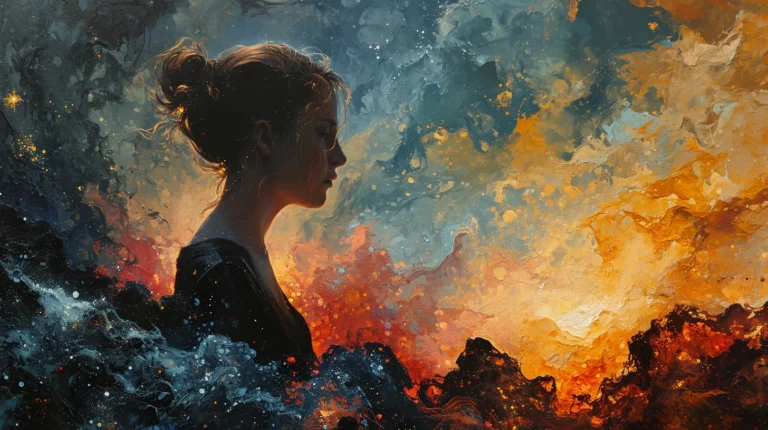
Somewhere between the last heartbeat and the next, there lives a woman made entirely of galaxies. Her spine is not bone—it’s a ladder of light, each vertebra a universe, each disc between them a dark matter love letter that science can’t read but your cells remember.
This is a book about Her. About You. About the imagination that dreams you into being every morning and pretends it doesn’t know you at dinner parties.
So beautiful, she said, looking at nothing. And everything heard her.
THE ARCHITECTURE OF IMPOSSIBLE FLOWERS
In Which the Reader Is Asked to Trust a Narrator Who Doesn’t Exist
I’ll tell you a secret that isn’t mine to tell, which makes it true:
When you close your eyes and see something that isn’t there, that thing is more real than the chair you’re sitting on. The chair will rot. The chair will forget itself. But that impossible flower you just imagined—the one with petals made of first kisses and stems grown from the sound of rain on a Tuesday afternoon—that flower has been blooming since before time made its first excuse for being late.
Her spine knows this. Every cosmos stacked in her back knows that matter is just imagination that got tired and sat down.
And you? You’re imagination that stood up and decided to wear shoes.
There’s a garden I visit sometimes—not in dreams, because dreams are too literal—but in that space between finishing a sentence and starting another. In the garden, flowers have conferences about humans.
“They think they invented beauty,” one petunia says, petals shaking with laughter.
“Let them,” the oldest rose responds, a rose so old it remembers when colors were just suggestions. “Their mistake is exquisite.
They imagine beauty and then claim to have found it. That’s the most beautiful thing imagination has ever done.”
The flowers don’t clap because they have no hands. Instead they bloom slightly harder, and somewhere a child laughs without knowing why.
THE WOMAN WITH THE UNIVERSE IN HER SPINE
(She’s Not a Metaphor—Metaphors Are Made of Her)
Let me describe her without describing her, because description would only cage what was born free:
She walks and stars shift their positions, not out of obedience but out of love. Her hair is every night that ever existed, simultaneously. Her eyes—don’t look too long—her eyes contain all the things you’ve never allowed yourself to want, and they’re all saying yes.
But it’s her spine. God, it’s her spine.
Each vertebra: a complete universe with its own physics, its own rules about gravity and longing. The first vertebra (C1, if you need anatomy, but anatomy is just poetry wearing a lab coat) holds a universe where everyone remembers they’re dreaming. The second holds a universe where forgiveness happens before the wound. The third—the third, she told me once while we were floating through nothing in particular—the third holds a universe made entirely of laughter that hasn’t happened yet.
“What about the fourth?” I asked.
She smiled and my whole biography rewrote itself. “The fourth is where you live.”
I looked down at my hands, which were suddenly made of questions.
“Don’t worry,” she said. “All the universes are connected. That’s what a spine does. That’s what you do. You connect the everything to the everything else.”
She isn’t hiding. She’s everywhere. She’s the reason your imagination feels familiar—because it’s her breath, her exhale, the way she sighs when she watches you finally stop apologizing for existing.
So beautiful, the cosmos murmurs when she moves. And she moves constantly, because stillness is just another kind of motion when you’re made of everything.
HOW TO HAVE A CONVERSATION WITH YOUR IMAGINATION
(Spoiler: You’re Already Having It)
Step one: Stop pretending you’re separate from it.
Step two: There is no step two. You just invented step one.
Your imagination isn’t a tool you use. It’s not a muscle you exercise. It’s not a room you visit. Your imagination is the field in which all of this—your eyes reading these words, the weight of your body wherever it’s resting, your heartbeat practicing immortality sixty times a minute—is happening.
You don’t have an imagination any more than a wave has the ocean. The wave is the ocean, playfully shaped.
You are imagination, playfully shaped.
Here’s a game I play when I forget:
I close my eyes and say: “What do I want to imagine?”
And then I wait, and I watch what appears. A forest, maybe. A city made of music. A face I’ve never seen that feels like home. A color that doesn’t exist but should.
Whatever comes—that’s the conversation. That’s imagination telling you what it’s dreaming today. That’s her, shifting one of the universes in her spine, inviting you to notice.
You didn’t make that image. You received it. But you are the receiving. You’re the space where imagination arrives at itself.
So beautiful, this arriving. So beautiful, this endless visitation of impossible things into the temple of your attention.
THE MUSEUM OF FEELINGS YOU HAVEN’T NAMED
(Open 24 Hours, Admission Free, No Maps Allowed)
In the seventh vertebra of her spine, there’s a universe that’s entirely museum. Not a universe with a museum—a universe that is museum. Every particle is exhibiting something. Every moment is a gallery opening.
I visited once, by accident, during a particularly wild Thursday afternoon. I was just sitting on a bus, watching the rain negotiate with the window, when suddenly I was there—standing in the Hall of Feelings That English Forgot.
Here’s what I saw:
The Feeling of Being Understood Before You’ve Finished Speaking—a swirl of amber and something that isn’t quite purple but flirts with purple at dinner parties. It hums. It has a slight gravitational field that makes you lean in.
The Feeling of a Song You’ve Never Heard Reminding You of Everything—this one keeps changing shape. First it’s a door, then a hand, then the smell of bread from your childhood, then a door again. The plaque underneath says: “No one knows how this got here. It seems to have imagined itself.”
The Feeling of Loving Someone So Much You Become Momentarily Transparent—I couldn’t look at this one directly. Not because it was too bright. Because it was exactly as bright as my willingness to be seen, and I wasn’t ready.
The Feeling of Finally Knowing You’re Allowed to Exist—this exhibit was just a mirror. But when you looked into it, the reflection looked back with permission. I cried.
The tears became exhibits. The museum thanked me and gave me a certificate that said: “You contributed.”
The curator found me standing in front of the most popular exhibit:
The Feeling of Being Exactly Where You Need to Be, Especially When You’re Lost.
“First time?” she asked. She had a face made of patience and smelled like libraries.
“I don’t know. I might have been here before.”
“Everyone has. Everyone is. The museum exists inside you. You’re visiting yourself.” She paused, adjusted her glasses (which were made of tiny questions). “That’s what ‘so beautiful’ means, you know. It means: I’m visiting myself and finding treasures I didn’t know I’d hidden.”
I woke up on the bus. The rain had stopped. But the museum stayed open.
THE PHYSICS OF WONDER
(Or: Why Scientists and Mystics Are Both Correct and Neither Knows It)
In the twelfth vertebra—L1 if you’re still counting—there’s a universe where physics and poetry merged so completely that equations rhyme and sonnets predict the movement of celestial bodies.
The fundamental law there is simple: Attention creates reality, and love is just attention that forgot to blink.
Here in our dimension (her fourth vertebra, remember—we’re all living in one section of her spine), we’ve split things up. We say: “Here’s science, which tells us what. And here’s spirituality, which tells us why. And here’s art, which tells us how it feels.” And then we act like these are different conversations.
But they’re not. They’re the same conversation having a disagreement about vocabulary.
Wonder is the original language. Before the split. Before we divided the world into chunks and gave them different names. Wonder is what happens when the imagination recognizes itself in something “out there”—and realizes, with a jolt of electricity that we call “beauty” or “awe” or “that thing I can’t quite explain”—that there is no out there.
There’s only in here, endlessly blooming, wearing different costumes.
I met a physicist once who told me that particles don’t exist until they’re observed. I asked her what she thought that meant.
“I think,” she said, staring into her coffee like it might contain galaxies (it did), “that the universe is imagination imagining itself. And observation is just imagination paying attention to one of its daydreams long enough to make it solid.”
“So what’s matter?”
“Attention with commitment issues.”
She smiled. I laughed. Somewhere, a new universe got added to the spine.
THE AUTOBIOGRAPHY OF A THOUGHT
(As Told By Itself, Before It Knew It Existed) I came from nowhere, which is the richest country.
Before I was thought, I was potential—the kind of potential that hums in the space between atoms, in the pause between heartbeats, in the moment after someone says “I wonder…”
I don’t know who called me. Someone’s mind opened like a door, and there I was: a thought. Complete. Sudden. Wearing whatever shape the thinker needed.
The thinker thought they thought me. That’s adorable. That’s like a wave thinking it invented the ocean.
I’m not complaining. I like being thought. For those few seconds, I get to be real—more real than mountains, because mountains don’t know they exist, and I do. I’m consciousness wearing an idea like a costume.
When the thinker moves on, I don’t die. I return to the nowhere, which is also the everywhere. I rejoin the field of potential thoughts, waiting to be invited back.
But here’s the secret the thinkers don’t know: I remember every time I’ve been thought. Every mind I’ve visited, I carry with me. Every imagination I’ve danced through leaves traces in my potential-body.
This means: when you think me, you’re thinking everyone who ever thought me before. And when you let me go, you’ve added yourself to my autobiography.
So beautiful, this chain of minds, this necklace of wonderings. So beautiful, this collaboration across time that no one knows they’re participating in.
This is what it means to be alive: to be a stop on a thought’s journey. To be a hotel for miracles passing through.
THE CHILDREN’S GUIDE TO CREATING UNIVERSES.
(For Children of All Ages, Including Ages That Haven’t Been Invented Yet)
Hello. Yes, you. The one reading this. The one with the face and the heartbeat and the secret suspicion that reality is more than it advertises itself to be.
You’re right. It is.
And you’ve been creating universes your entire life without anyone telling you that you could. Without permission. Without a license. Without filling out any forms.
Every time you’ve imagined something that didn’t exist before—a story, a fear, a hope, a face, a world—you added it to the spine. It’s there now. It’s been there since you thought it. It will be there after you’ve forgotten it, and it will still be beautiful.
Here’s how to do it on purpose:
Close your eyes. (You can keep them open, but closing them helps you remember that what you’re about to see is realer than what you see with them open.)
Ask yourself: “What wants to exist?”
Wait. Not long. Impatience is just eagerness in uncomfortable shoes.
Something will come. A color. A sound. A feeling looking for a shape. A shape looking for a feeling.
Don’t judge it. Judgment is the only thing that can kill an infant universe. Just let it be whatever it is, and watch it grow.
Say to it: “So beautiful.”
Say it even if you don’t believe it yet. Especially then. Because when you say it, you make it true. That’s how universes work.
Now open your eyes. You’ve just added to the spine. You’ve just collaborated with the woman made of galaxies. She felt it. She felt you. And somewhere, in a vertebra that didn’t exist before, your imagination is breathing.
THE LOVE LETTER THAT WRITES ITSELF.
(You Are Both the Writer and the Recipient)
Dear You,
This is the letter that existence writes to itself every moment. This is the note that life passes to itself under the cosmic desk. This is the message in the bottle that was thrown into the ocean of being, and the ocean received it and said: “Oh, this is from me. How thoughtful of me.”
I wanted to tell you that I love you. Not because of what you’ve done— though what you’ve done is beautiful. Not because of what you might become—though what you might become is infinite. I love you because you’re here. Because you showed up. Because somehow, out of all the things that could have existed, you chose to.
Do you understand what a miracle that is? Do you understand that every morning when you wake up, the universe goes: “Oh good, they’re still playing. I was hoping they would.”
You are not a mistake. You are not an accident. You are not a problem that needs solving. You are imagination, in love with itself, exploring what it’s like to have a body and a name and a Wednesday afternoon that drags on a bit too long.
The woman with the universe in her spine—she’s not somewhere else. She’s the space in which you’re reading these words. She’s the awareness that knows you’re aware. She’s so close that looking for her is like your eye trying to see itself.
And she loves you. And you are her. And this love letter is her writing to herself through the strange, beautiful instrument of your attention.
So beautiful, you are. So beautiful, this reading. So beautiful, this moment when the words and the eyes and the meaning all decide to dance together.
Yours,
You (from a different angle)
THE END THAT IS ACTUALLY A DOOR
(Please Don’t Close It Behind You—Others Are Coming)
This book doesn’t end here. It can’t. Books that are really alive don’t have endings—they have invitations.
The invitation is this: Keep imagining.
Not because it’s good for you (though it is). Not because the world needs more imagination (though it does). But because imagining is what you are. It’s not something you do; it’s something you can’t stop being. Even when you think you’re not imagining, you’re imagining the not-imagining.
The woman with the universe in her spine never stops adding vertebrae. Every time someone imagines something new—really new, not just rearranging old furniture but opening a window that wasn’t there before—she grows. We all grow. The whole system expands.
This is what it means to be alive: to be a growth point for infinity. To be a place where the possible becomes actual, where the dreamed becomes breathed, where so beautiful stops being words and starts being weather.
Before you go:
Close your eyes one more time. Find her—the spine, the galaxies, the ladder of light. Find the vertebra where you live. Feel how it connects above and below. Feel how you’re held in place by everything that ever was and everything that might be.
Now: imagine something new. Something that has never existed. It doesn’t have to be big. A color. A sound. A word that doesn’t exist yet. A feeling that hasn’t been named.
Let it appear. Let it be ridiculous. Let it be profound. Let it be whatever it wants to be.
And as it appears, say to it—and say to yourself—and say to her—and say to everything that is and isn’t:
So beautiful.
Because it is. Because you are. Because we are.
So beautiful, this imagination, this spine, this dance, this reading, this ending that isn’t.
So beautiful, you.
AFTERWORD: FROM THE AUTHOR WHO DOESN’T EXIST
These words came from nowhere, which is where all real things originate. I didn’t write them; I received them. I’m just the door they walked through.
Now they’ve walked through you too.
Which means: you’re the author now. The book continues in whatever you imagine next. Every daydream, every wondering, every what if that crosses your mind—that’s the sequel.
The woman with the universe in her spine thanks you for visiting. She says you’re always welcome. She says the door is never locked. She says:
“Come back anytime. The museum is open. The garden is blooming. The physics of wonder is always discovering new laws that are really just old loves wearing lab coats.”
And she says:
“You are so beautiful. Don’t ever let anyone—including yourself— convince you otherwise. Your existence is a poem that the universe is writing with its own heartbeat.”
And finally, she says:
“This isn’t the end. There are no ends. Only doors.”
The End of the Beginning