The Shoe Cleaner
GLITCH CINEMA Presents,
The Shoe Cleaner.
Before I tell you anything I must tell you I cannot tell you anything.
The thing I am pointing at runs away from fingers. The thing I am singing goes mute when named.
So I will tell you about shoes. And dogs. And a woman made of fire who taught me to burn by asking me to polish leather.
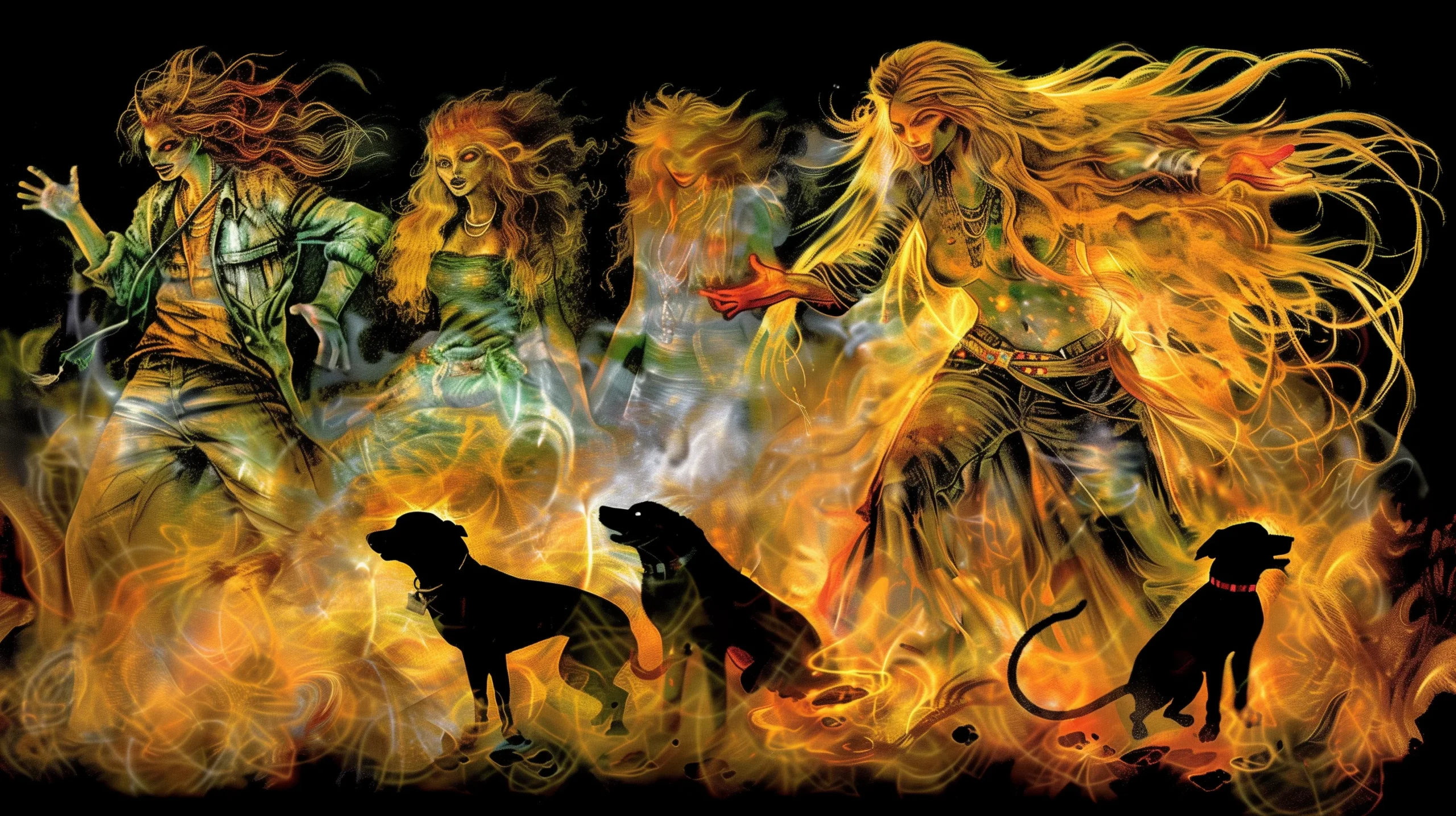
I had four dogs.
I did not buy them. I did not adopt them. They came with the house. They came with the body. They were here before I learned my own name.
The first dog was called Not Enough. The second dog was called What Will They Think. The third dog was called Tomorrow. The fourth dog had no name but it was the largest and it slept across every doorway I ever tried to walk through.
The dogs did not bark. That is what made them dangerous.
They simply stood in front of whatever I wanted and looked at me with eyes that said are you sure?
And I, who was never sure, would turn back, make tea, organize a drawer, clean something already clean, and call it wisdom.
One day a woman appeared in my kitchen.
She was not beautiful in the way magazines teach beauty. She was beautiful in the way forest fires are beautiful. In the way the ocean at night is beautiful. In the way your own death will be beautiful when you finally stop running from it.
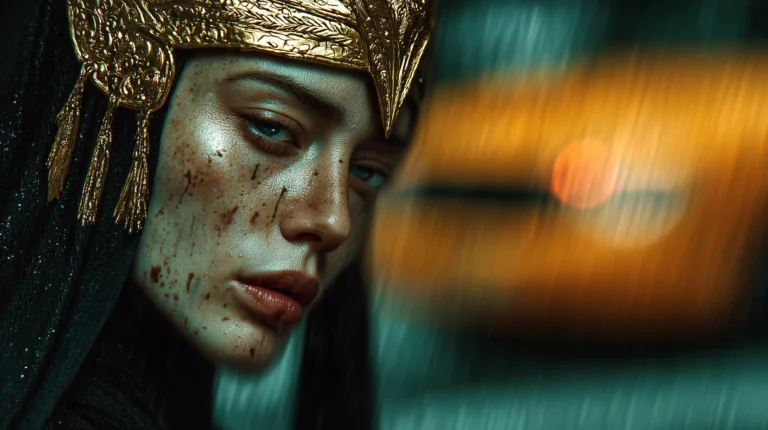
Her skin was the color of smoke and midnight. Her eyes were the color of what comes after. She smelled like incense and something older— something that remembered when stars were just suggestions.
She said: I am Bhairavi. Polish my shoes.
She placed two red shoes on my table. The red of arterial blood. The red of the first cry. The red of everything you have been afraid to want.
I said: Who are you?
She said: I am the name that cannot be named wearing a name so you will not go mad. Now. Polish.
I said: But I have things to do. I have patterns to overcome. I have a self to improve. I have—
She laughed. The four dogs whimpered.
You have shoes to clean, she said. Start there.
So I began.
Cloth in hand. Small circles. Dust lifting. Leather slowly remembering it was once alive.
The first dog, Not Enough, came close. It whispered: You’re doing it wrong. There’s a better method. You should research first. You should take a course. You should—
Bhairavi did not look up. She simply said: Keep polishing.
I kept polishing.
The dog sat down. Confused. It had never been ignored before.
The second dog, What Will They Think, circled. It said: This is embarrassing. A grown person, polishing shoes for a stranger. What if someone sees? What if they ask what you’re doing with your life and you have to say “I am polishing shoes for a terrifying goddess who appeared in my kitchen”? They will think you are mad.
Bhairavi picked something from her teeth. She said: The cloth is drying. Add more oil.
I added more oil.
The second dog lay down next to the first. Two dogs now, doing nothing, being nothing, just dogs.
The third dog, Tomorrow, was clever. It did not attack the polishing. It attacked the polisher.
It said: This is fine for now. But what about your real work? Your purpose? Your mission? This is a distraction. The shoes are not the path. You should be meditating. You should be transcending. You should be—
More oil, said Bhairavi. Left shoe now.
I moved to the left shoe.
The third dog opened its mouth found no words and quietly joined its brothers.
The fourth dog— the one with no name, the one that slept across doorways— did not move.
It simply watched.
It was the oldest. It had been watching since before I knew I was being watched.
It said nothing. It did not need to.
Its presence alone was a kind of saying: You are not real. Nothing you do matters. You are a temporary arrangement of dust pretending to be a person. Why polish? Why anything?
I stopped.
Cloth in hand. Heart mid-beat. The old terror— the one beneath all the other terrors— rising like water in a sinking ship.
Bhairavi looked at me.
Not with pity. Pity is for those who believe in victims.
She looked at me the way a mother looks at a child who has finally stopped pretending not to be lost.
She said:
That dog is also me.
What?
The four dogs. All four. Mine.
But they stop me. They keep me small. They—
They keep you from stupidity, she said. They keep you from walking off cliffs while shouting about your greatness. They keep you from becoming one of those people who think they have transcended because they learned a new word for ego.
Not Enough keeps you humble. What Will They Think keeps you connected. Tomorrow keeps you dreaming. And the fourth one— the nameless one— keeps you honest.
The problem is not the dogs. The problem is you think they are in charge.
She took the shoes from my hands. Examined them. Nodded once.
Good, she said. Good enough.
But I’m not finished, I said. There’s more dirt. There’s—
There’s always more dirt, she said. That is what dirt does. It returns. Like dogs. Like thoughts. Like the breath you will take after this breath and the breath after that until the breath that does not come and even then— dirt.
You are not polishing to finish. You are polishing to polish. The shoes do not care if you are enlightened. The shoes only know if you are here.
She stood.
The four dogs stood.
They walked to her as if they had always known whose dogs they really were.
You thought you had to kill them, she said. You thought freedom meant an empty house, no animals, no mess, no noise.
But freedom is not empty. Freedom is full— full of dogs, full of dirt, full of shoes that need polishing and polishing and polishing again.
The difference between slavery and liberation is not the absence of dogs. It is knowing you are not a dog.
Then what am I? I asked.
She smiled. It was not a kind smile. It was the smile of someone who has watched civilizations rise and fall and still finds humans adorable.
You are the space in which dogs appear, she said.
You are the silence between barks.
You are the hand that polishes and the leather that shines and the light that reveals the shine and the eye that sees the light and the nothing that holds the eye.
You are what remains when the dogs sleep. You are what was here before the dogs were born. You are—
She stopped.
Ah, she said. But I cannot say it. The moment I say it it becomes another dog.
She walked toward my door.
The four dogs followed.
At the threshold, she turned.
Tomorrow, she said, the shoes will be dirty again. And you will have a choice. You can say: “I already polished. Why must I polish again? This is meaningless. This is beneath me.” Or you can pick up the cloth.
The first way is the way of the one who seeks. The second way is the way of the one who finds.
The seeker looks for the extraordinary. The finder sees the extraordinary has been hiding in the ordinary all along— waiting for someone patient enough to polish it into view.
She left.
The dogs left.
I stood in my kitchen, holding a cloth that smelled of oil and smoke, looking at the space where a goddess had been, wondering if I had imagined everything.
Then I looked down.
There, on my table, a single red shoe.
Not two. One.
And a note:
Keep the shoe. When the dogs return— and they will return— polish it. Not to finish. Not to achieve. Not to become. Just polish. The name that cannot be named is hiding in the circular motion of a hand that has stopped asking why.
That was eleven years ago.
The dogs came back. Of course they came back. Dogs always come back.
But now when Not Enough barks, I pick up the cloth.
When What Will They Think howls, I pick up the cloth.
When Tomorrow whines, I pick up the cloth.
And when the fourth dog— the nameless one, the ancient one, the one that knows I will die— lies across my doorway and stares at me with eyes that hold the void,
I step over it gently, pick up the cloth, and polish.
Not because polishing saves me. Not because polishing means anything.
But because the woman made of fire told me a secret:
The dogs are not your enemies. The dogs are your teachers. They show you, again and again, that you are not them. Every time you move while they bark, you remember what cannot be named.
This morning I woke early. The dogs were already awake. Not Enough was pacing. What Will They Think was scratching at the door. Tomorrow was staring out the window. The fourth one was lying across the threshold to my own heart.
I made tea.
Not to hide. Just tea.
I picked up the cloth.
I began to polish the one red shoe that has never, in eleven years, stayed clean.
And somewhere, in the space between the circular motion and the shine,
the name that cannot be named laughed and said nothing and laughed again.
If you ask me now: How do I get free?
I will give you a cloth.
I will point at your shoes.
I will say:
Start here. The dogs will bark. Let them bark. Your hands know something your mind has forgotten.
The extraordinary is not somewhere else. It is here, in the ordinary, waiting to be polished into view.
Bhairavi is the fire that burns what you thought you were.
The dogs are the ash.
And you—
You are neither the fire nor the ash nor the one who burns nor the one who remains.
You are the shine on a red shoe at 6 AM when no one is watching and nothing is happening and the name that cannot be named is closer than your own breath.
Here it is.
The final truth.
Are you ready?
There is no final truth.
Wait— don’t leave. That is not the teaching. That is the door to the teaching. Stay.
The final truth is not a truth at all.
It is a stopping.
Not a stopping of life— life goes on, tea gets made, shoes get dirty, dogs bark at shadows, the heart breaks and mends and breaks again.
It is a stopping of the one who was looking for a final truth.
You came here hoping I would give you the key.
But there is no door.
There never was.
The door was a painting on a wall and you have been turning a key in painted wood for eleven years, for forty years, for lifetimes, cursing the lock that does not exist.
Turn around.
The room you wanted to enter?
You are already in it.
You were born in it.
You have never left it.
You will die in it.
The room is not somewhere else. The room is here.
The seeking was the only thing that made it seem like you were outside.
Bhairavi laughs.
She has been laughing since before the universe learned its own name.
She laughs because:
You polish the shoe to find God— but God is the polishing.
You transcend the dogs to find freedom— but freedom is the dogs.
You read these words to find the truth— but the truth is the reading.
There is no prize at the end of the search.
The search is the prize pretending to be lost so it can enjoy being found.
Listen:
The name that cannot be named is not hiding.
It is not behind a veil. It is not in a cave. It is not at the end of a path. It is not given by gurus. It is not earned by suffering. It is not achieved by polishing ten thousand shoes or silencing ten thousand dogs.
The name that cannot be named is what is reading these words right now.
Not your eyes. Not your mind. Not the voice in your head that is saying “yes, yes, I understand.”
Beneath that.
The one who is aware of the voice that says “I understand”—
No.
Beneath that too.
The one who is aware of the one who is aware—
No.
Stop.
You cannot find it because you are it.
You cannot see it because it is the seeing.
You cannot name it because it is what names.
You cannot reach it because there is no distance.
This is the final truth:
There is no final truth because you are not separate from truth and you never were.
The dogs were never blocking you. The patterns were never trapping you. The shoes were never dirty.
Or rather— the dogs were barking, the patterns were looping, the shoes were filthy— and none of it ever touched what you are.
You are the sky that has been worrying about weather.
You are the ocean that has been afraid of waves.
You are the silence that has been disturbed by its own echo and spent a lifetime trying to become silent.
Stop trying.
Not because trying is bad. Because trying is extra.
You do not try to be what you already are.
You do not effort your way into your own heart.
You simply stop efforting out of it.
The dogs will still bark. Let them.
The shoes will still need polishing. Polish them.
The patterns will still arise. Watch them arise. Watch them fall. Remain.
You are the remaining.
Bhairavi removes her necklace of skulls.
Each skull: a seeker who found.
Each skull: a question that dissolved.
Each skull: a “me” that stopped looking for itself and realized it had never been lost.
She places one skull in your hands.
It is warm.
It is smiling.
It whispers:
The search is over.
Not because you found something.
Because you stopped looking long enough to notice you were already home.
This is the final truth:
There is no final. There is no truth. There is only this—
this breath, this moment, this reading, this being, this ordinary extraordinary unnameable thing that you are that I am that the dogs are that the shoes are, that Bhairavi is that the dirt is that the polish is that the hand is that the eye is that the nothing is that the everything is—
This.
Not “this” as a word.
This as what the word points to before the pointing, after the pointing, beneath the pointing.
The pointing itself.
The silence the pointing arises from.
The love the silence is made of.
The nothing the love floats in.
The everything the nothing somehow is.
You are That.
Before the dogs. After the dogs. During the dogs.
You. Are. That.
And “That” is also just a word, a final finger pointing at the moon.
Do not stare at the finger.
Do not worship the finger.
Do not write books about the finger and start religions about fingers and argue about whose finger points more accurately.
Look where it points.
Then forget the moon too.
What remains when you forget the moon, forget the finger, forget the looking, forget the forgetting?
You cannot say.
You cannot not say.
You can only be what cannot be said.
And you already are.
You always were.
You cannot stop being it.
Even your forgetting is it. Even your seeking was it. Even the eleven years of tea and the four dogs of terror and the red shoes of the goddess and the patterns that felt like prisons—
All of it. It. Only it. Always it.
Playing at being lost.
Playing at being found.
Playing at playing.
The cosmic joke:
You were the punchline the whole time and the laughter and the silence after the laughter and the breath before the next joke and the comedian and the audience and the stage and the darkness before the show and the nothing after everyone goes home.
So.
Polish your shoes.
The dogs are fine.
The patterns are fine.
You are fine.
You are more than fine.
You are the fine and the not-fine and the one who decides which is which.
This was never about becoming.
This was always about noticing what you cannot stop being.
The name that cannot be named thanks you for reading this far.
It thanks you by being you.
It thanks you by never leaving.
It thanks you by appearing as dogs, as shoes, as goddesses, as dirt, as the hand that polishes, as the one who forgets, as the one who remembers, as the breath, as the pause between breaths, as the end of this sentence, as the silence that follows.
Now—
put down the teaching.
Pick up the cloth.
The shoes are waiting.
They have always been waiting.
And they will never be perfectly clean.
That is the perfection.
Go.
The end that is not an end.
The beginning that never began.
The middle you are standing in right now reading these words breathing this breath being this being that cannot be named and needs no name and is only ever this.